

Before a container is sealed or a pallet is wrapped, the real work has already begun. Paperwork may not look dramatic, but it decides whether cargo glides through customs or gets stuck, inspected, fined, or delayed. This is where freight documentation risk management quietly does its job. Not as bureaucracy for its own sake, but as a practical shield against avoidable risk. For experienced freight forwarders, documentation is the first line of defense. A single inconsistency can trigger holds, inspections, demurrage, or worse, compliance violations that follow a company for years.
Why Documentation Is the First Risk Filter
Every shipment tells a story to customs authorities. That story must be consistent across the commercial invoice, packing list, certificate of origin, HS classification, licenses, and transport documents. When details conflict, systems flag the shipment automatically. Humans then step in, and scrutiny increases. This is why pre-shipment documentation checks to avoid holds matter so much. Forwarders know that once cargo is physically moving, options shrink fast. Before loading, you can correct. After loading, you negotiate.
A solid documentation review process before cargo moves looks at more than completeness. It asks smarter questions:
-
Does the declared value match market norms?
-
Are product descriptions aligned with the HS code used?
-
Are country-specific rules reflected correctly?
-
Is the consignee eligible to receive this cargo?
This is how forwarders catch compliance issues before loading, rather than reacting after the fact.
Where Things Usually Go Wrong
Most documentation errors are small, quiet, and costly. Common documentation errors that increase shipment risk include mismatched weights, vague cargo descriptions, outdated importer details, missing licenses, or incorrect incoterms. On their own, they look minor. In combination, they look suspicious. Forwarders are trained to spot patterns, not just mistakes. They know how forwarders identify documentation red flags because they see them daily across lanes, industries, and authorities. A shipment that looks routine to a shipper may raise alarms to someone who knows current enforcement trends. This is also where freight compliance risk reduction becomes practical rather than theoretical. It is not about avoiding rules. It is about aligning documents with how authorities actually assess risk.
The Forwarder Documentation Workflow Explained
A professional forwarder documentation workflow follows a structured path, even when timelines are tight. It usually starts with document collection and standardization. Forwarders do not simply accept files. They normalize formats, terminology, and data fields so inconsistencies surface early.
Next comes cross-document verification. Values, quantities, origins, and product descriptions are checked against each other. This step alone prevents a significant number of customs holds.
Then comes regulatory alignment. This is where export documentation best practices matter. Forwarders verify whether export controls, sanctions, dual-use regulations, or destination-specific rules apply. Many delays happen not because paperwork is missing, but because it ignores a rule that recently changed.
Finally, there is a pre-clearance mindset. Forwarders assess how customs is likely to interpret the shipment. This includes anticipating inspection triggers and applying documentation strategies to avoid cargo inspections wherever legitimately possible.
Freight Documentation Risk Management as a Strategic Layer
Freight documentation risk management is an essential strategy. Forwarders do not review documents in isolation. They consider trade lanes, commodities, enforcement patterns, and the profiles of shippers and consignees. This turns paperwork into a predictive tool. When done right, this approach supports customs documentation risk control by reducing uncertainty before authorities ever touch the file. It also enables a more deliberate trade compliance documentation strategy, especially for companies shipping frequently or across multiple jurisdictions. This is also how forwarders help clients reduce demurrage through documentation accuracy. Fewer holds mean fewer storage days, fewer surprise costs, and fewer uncomfortable calls explaining delays.
Audits That Prevent Surprises
A shipping documentation audit process about resilience. Forwarders often perform informal audits on recurring shipments, checking whether documentation standards have slipped over time. This is especially important when staff changes, suppliers rotate, or new markets open up. Audits help identify systemic issues rather than one-off mistakes. They reveal whether a company is relying on outdated templates, incorrect assumptions, or inconsistent product classifications. Fixing these early prevents repeat risk. This is another layer of freight compliance risk reduction that rarely gets attention but delivers real financial impact.
How This Reduces Inspections and Holds
Customs authorities use risk profiling. Shipments that look clean, consistent, and predictable pass faster. By tightening documentation review before cargo moves, forwarders lower the probability of inspection without cutting corners. They align documents with what authorities expect to see, not just what regulations technically require. This is where freight documentation risk management directly affects operational outcomes. Fewer inspections mean faster clearance, lower costs, and less disruption across supply chains. It also protects relationships. Consignees receive cargo on time. Authorities see consistent compliance. Forwarders maintain credibility.
The Long-Term Payoff
Documentation discipline compounds over time. Companies that invest in strong processes build a reputation for reliability. Their shipments move faster. Their compliance costs drop. Their teams spend less time firefighting and more time planning. Forwarders play a key role here by embedding best practices into daily operations. They act as both gatekeepers and advisors, translating complex rules into workable processes. This is why freight documentation risk management is not just a defensive tactic. It is a competitive advantage.
Final Thoughts
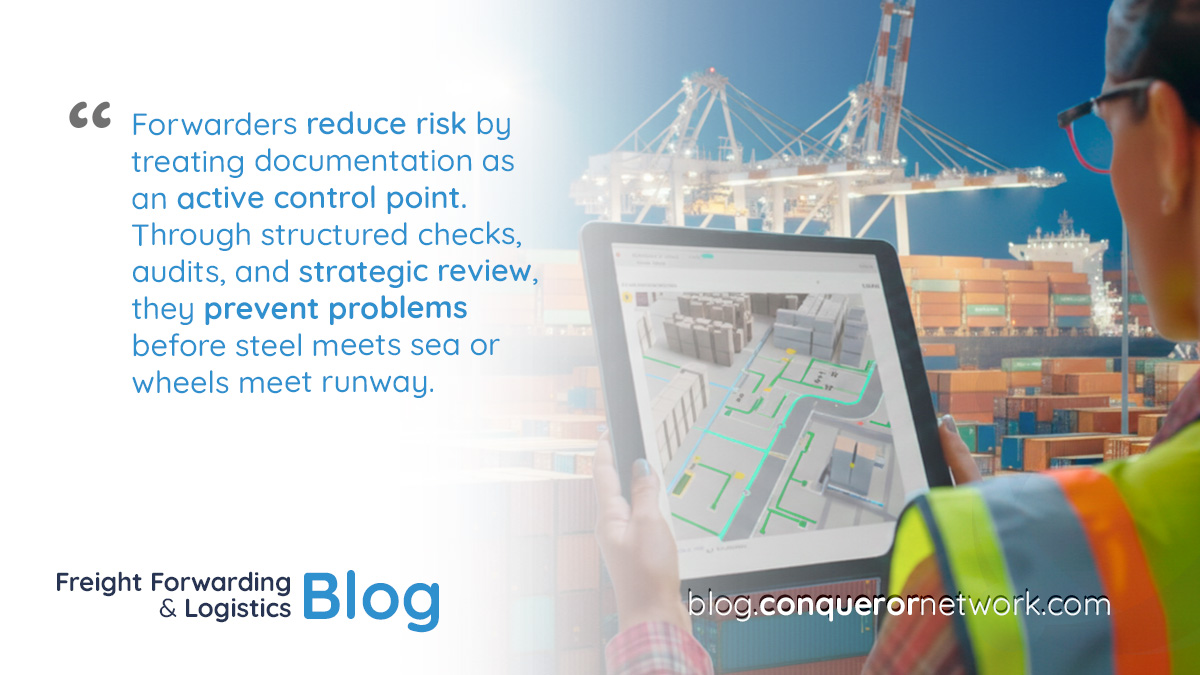
Cargo usually gets delayed because documents contradict each other, misrepresent reality, or ignore how customs actually work. Forwarders reduce risk by treating documentation as an active control point. Through structured checks, audits, and strategic review, they prevent problems before steel meets sea or wheels meet runway. When documents work in your favor, cargo moves with confidence. And that confidence starts well before the first container is loaded.