

The San Francisco high-tech supply chains sit at the heart of one of the world’s most influential technology ecosystems. Northern California is home to hundreds of hardware manufacturers, semiconductor innovators, robotics firms, and biotechnology companies whose products depend on efficient global logistics. While software often dominates discussions about the region’s economy, the physical movement of high-value technology cargo remains a crucial part of this ecosystem. From semiconductor components and networking equipment to laboratory instruments and advanced electronics, thousands of shipments move through the Bay Area every week. Freight forwarders managing high-tech logistics in San Francisco coordinate imports from Asia, exports to Europe, and domestic shipments across North America. The region’s logistics infrastructure supports a constant flow of technology cargo that powers industries ranging from artificial intelligence to medical research. Because of this unique concentration of innovation, San Francisco high-tech supply chains have become a strategic gateway for global technology trade.
Why San Francisco High-Tech Supply Chains Matter to Global Technology Trade
The Bay Area’s importance comes from its close connection to Silicon Valley, the world’s most famous innovation hub. Cities like San Jose, Santa Clara, and Mountain View host semiconductor manufacturers, robotics startups, electronics producers, and research institutions. These companies depend on highly coordinated international logistics. Semiconductor components may be produced in East Asia, assembled in North America, and shipped to Europe or other global markets. This makes technology cargo shipping far more complex than traditional freight movements. Two major gateways support these supply chains:
-
Port of Oakland, a major West Coast container gateway for imports and exports
-
San Francisco International Airport, a key hub for time-sensitive air freight
The airport in particular plays a vital role in air freight for the San Francisco tech industry, handling high-value cargo that requires rapid transit and strict handling standards. Electronics, semiconductors, and precision equipment often move via air transport to minimize delays and reduce risk. In many cases, shipments moving through San Francisco high-tech supply chains are prototypes or sensitive components needed for research and product development. Even a small delay can disrupt production schedules for technology companies operating on tight timelines.
The Logistics Behind Silicon Valley’s Hardware Economy
The technology sector depends heavily on specialized logistics services. Unlike standard consumer goods, many high-tech products require strict environmental controls, enhanced security, and extremely precise delivery windows. Freight forwarders working in Bay Area technology logistics routinely manage:
-
Semiconductor logistics in California, where temperature control and shock protection are essential
-
High-value cargo logistics for equipment worth hundreds of thousands of dollars
-
Time-critical shipments for research laboratories and product development teams
-
Secure electronics freight forwarding for confidential prototypes
For example, a semiconductor fabrication plant may require replacement components within hours to avoid production interruptions. A robotics company may require delicate sensors to be shipped quickly from overseas manufacturers. In each case, the logistics provider must combine speed, reliability, and specialized handling expertise. This level of complexity is one reason electronics freight forwarding in the USA often concentrates in regions with strong logistics infrastructure and experienced freight professionals.
Challenges Facing Freight Forwarders in the Bay Area
Despite the opportunities created by the technology sector, freight forwarders operating in San Francisco’s high-tech supply chains face numerous operational challenges.
1. High operational costs
The Bay Area is one of the most expensive regions in the United States for logistics operations. Warehouse space, labor, and transportation costs are significantly higher than in many other parts of the country.
2. Complex compliance requirements
Technology shipments often include controlled electronics, advanced components, or research equipment that may fall under export regulations. Managing documentation and compliance for these shipments adds an extra layer of responsibility for logistics providers.
3. Speed and reliability expectations
Technology companies operate in extremely competitive environments. Delays in shipping prototypes or production components can slow product launches or interrupt manufacturing cycles. As a result, forwarders handling technology cargo shipping must maintain extremely high service standards.
4. Global coordination
Most technology supply chains span multiple continents. Components may originate in East Asia, pass through North America for assembly or testing, and then move to global markets. Coordinating these international shipments requires strong relationships with partners worldwide.
Why Global Networks Matter for Forwarders in Technology Hubs
Because San Francisco’s high-tech supply chains are inherently global, freight forwarders in the region benefit significantly from strong international partnerships. Joining a professional freight network can significantly affect how forwarders manage international shipments. One example is Conqueror Freight Network, the world’s largest exclusive freight forwarders’ network. With members in over 240 cities across more than 120 countries, the network connects independent logistics companies through carefully vetted partnerships. Each city is represented by a single member, thereby ensuring territorial exclusivity and enabling forwarders to build trusted, long-term relationships with partners abroad.
For freight forwarders in San Francisco, such a network offers several advantages. First, it creates reliable global coverage. Technology shipments frequently move between the United States, Europe, and Asia, and having trusted partners at origin and destination helps ensure smooth coordination.
Second, the network offers opportunities for collaboration through its Annual Meeting, where members meet face-to-face, strengthen partnerships, and explore new business opportunities. Finally, vetted partners reduce operational risk. When handling high-value cargo logistics or sensitive electronics shipments, forwarders must be confident that their overseas partners meet the same professional standards. For companies managing complex Silicon Valley supply chain shipments, these international relationships can make operations far more efficient and secure.
The Future of High-Tech Logistics in San Francisco
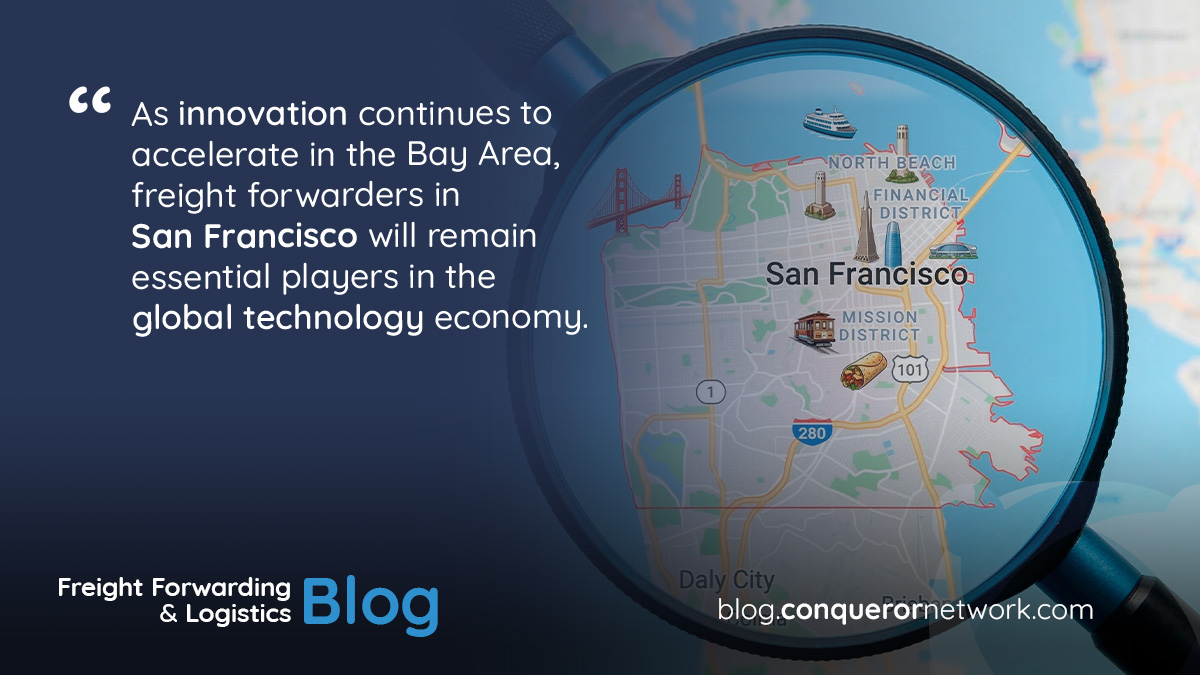
The role of San Francisco high-tech supply chains is likely to grow as new technologies reshape global trade. Industries such as artificial intelligence hardware, semiconductor manufacturing, clean technology, and advanced medical devices are expanding rapidly across Northern California. Each of these sectors relies on highly specialized logistics services to move delicate, valuable, and time-sensitive cargo around the world. As innovation continues to accelerate in the Bay Area, freight forwarders in San Francisco will remain essential players in the global technology economy. Their ability to manage complex international shipments, coordinate with partners worldwide, and support fast-moving technology industries ensures that the region will remain one of the most important logistics hubs for high-tech cargo in the United States.