

The global manufacturing map is being quietly redrawn. For years, China sat firmly at the center of production networks. Now, that dominance is being tested. Rising costs, geopolitical risk, tariffs, and resilience concerns are pushing manufacturers to rethink where they build. The result is a steady shift in China’s manufacturing toward Southeast Asia. Complexity is rising. Understanding Southeast Asia vs China manufacturing is no longer optional if you want to stay relevant in Asia trade.
What is the difference between Southeast Asia and China manufacturing?
China offers scale, speed, and deeply integrated supply chains, making it ideal for high-volume, complex production. Southeast Asia focuses on cost efficiency and risk diversification, with manufacturing spread across multiple countries, creating more fragmented but flexible production networks.
Why manufacturing is moving but not leaving China entirely
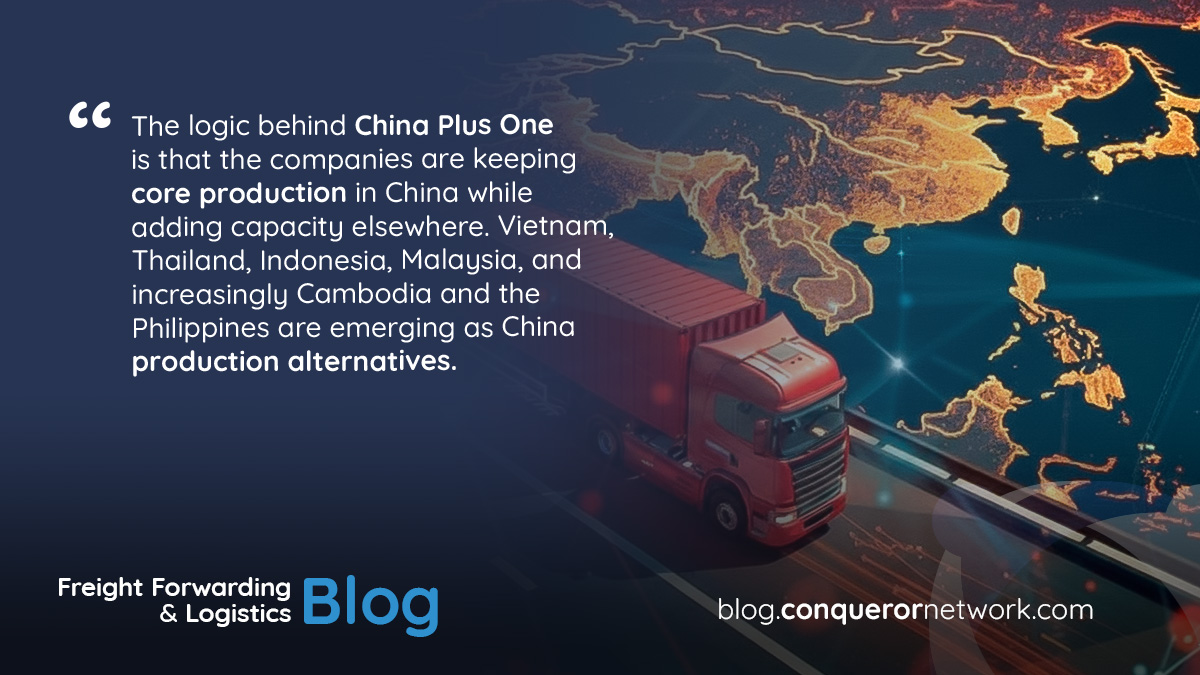
Despite the headlines, this is not an exodus. China remains unmatched in scale, supplier depth, and industrial efficiency. What is happening instead is manufacturing relocation Asia style. Brands are spreading risk. This is the logic behind China Plus One. Companies keep core production in China while adding capacity elsewhere. Vietnam, Thailand, Indonesia, Malaysia, and increasingly Cambodia and the Philippines are emerging as China production alternatives.
Drivers behind this shift include:
-
Rising labor and compliance costs in coastal China
-
Tariff exposure and trade uncertainty
-
Customer pressure for resilient, diversified supply chains
-
Government incentives across ASEAN
This supply chain diversification Asia approach reduces dependency on a single country while maintaining access to China’s ecosystem.
Southeast Asia vs China manufacturing: a forwarder’s lens
From a logistics perspective, Southeast Asia vs China manufacturing is less about who “wins” and more about how freight patterns evolve.
China offers:
-
Highly integrated inland-to-port logistics
-
Predictable schedules and capacity
-
World-class port infrastructure
Southeast Asia offers:
-
Competitive labor and operating costs
-
Growing specialization by country
-
Fragmented infrastructure and regulations
For forwarders, this creates a mixed environment. Opportunity grows, but so does complexity.
ASEAN manufacturing hubs are not interchangeable
One common mistake is treating Southeast Asia as a single market. It isn’t. ASEAN manufacturing hubs each play different roles.
-
Vietnam: Electronics, garments, footwear, furniture
-
Thailand: Automotive, machinery, food processing
-
Malaysia: Semiconductors, medical devices
-
Indonesia: Heavy industry, batteries, raw materials
-
Cambodia & Laos: Labor-intensive manufacturing
This fragmentation directly affects freight flows Southeast Asia. Instead of one mega-export corridor, forwarders manage multiple mid-sized origins feeding global trade lanes.
This is where Asia trade lanes restructuring becomes visible. Volumes are spread across more ports, borders, and modes.
How manufacturing shifts affect freight forwarders
The biggest change is operational, not theoretical. How manufacturing shifts affect freight forwarders shows up in daily work.
Forwarders now deal with:
-
More cross-border trucking within ASEAN
-
Smaller but more frequent shipments
-
Less standardized processes
-
Greater reliance on local partners
The production relocation impact on logistics is clear. Planning becomes harder. Transit times vary more. Cost predictability declines.
At the same time, forwarders who understand local nuances gain an edge. Those who treat ASEAN like China-lite struggle.
China factory relocation logistics implications
When factories relocate partially, supply chains stretch. Components may still come from China, get assembled in Vietnam, and ship out from Singapore or Laem Chabang.
This creates specific China factory relocation logistics implications:
-
Increased intra-Asia movements
-
More transshipment dependence
-
Complex rules of origin compliance
-
Higher documentation sensitivity
Forwarders become coordinators, not just transport providers. Managing timing between suppliers in different countries becomes a value-added service.
Freight forwarding opportunities in ASEAN countries
With complexity comes opportunity. Freight forwarding opportunities in ASEAN countries are expanding for those willing to invest.
Key growth areas include:
-
Cross-border road freight within ASEAN
-
Multimodal consolidation services
-
Vendor-managed logistics for dispersed suppliers
-
Trade compliance and origin advisory
Manufacturers entering Southeast Asia often lack local logistics experience. Forwarders who can design end-to-end solutions become long-term partners.
Logistics challenges of fragmented manufacturing Asia
The logistics that forwarders face include but are not limited to:
-
Uneven customs digitization
-
Infrastructure gaps beyond major ports
-
Border delays on road corridors
-
Regulatory inconsistency between ASEAN states
Cross-border logistics in ASEAN manufacturing requires patience and strong local networks. What clears smoothly in Singapore may stall in Myanmar or Laos.
Add seasonal issues and labor shortages, and planning margins shrink further.
Southeast Asia logistics infrastructure readiness
Ports in Vietnam, Thailand, and Malaysia are improving fast, but readiness varies. Southeast Asia logistics infrastructure readiness is uneven compared to China’s mature system.
Challenges include:
-
Limited hinterland connectivity
-
Capacity pressure during peak seasons
-
Equipment imbalances
-
Port congestion risks in Southeast Asia, especially during export surges
Forwarders must factor in buffers and alternative routings more often than they did in China-centric supply chains.
Comparing China and ASEAN supply chain risks
When comparing China and ASEAN supply chain risks, neither is risk-free. The nature of risk simply changes.
China risks:
-
Policy shifts
-
Geopolitical pressure
-
Cost inflation
ASEAN risks:
-
Infrastructure bottlenecks
-
Regulatory variation
-
Operational inconsistency
Smart shippers balance both. Smart forwarders help them do it without disruption.
The logistics impact of China Plus One
The logistics impact of China Plus One is long-term. Freight patterns will remain multi-origin, multi-port, and multi-modal.
For forwarders, success depends on:
-
Regional expertise, rather than just global branding
-
Strong local agents across ASEAN
-
Flexibility in routing and capacity planning
-
Advisory capability, not just execution
Those who adapt become architects of new supply chains. Those who don’t risk being sidelined.
What this really means for forwarders
The story of Southeast Asia vs China manufacturing is about mastering complexity. Forwarders who understand Southeast Asia’s fragmentation, anticipate freight flows Southeast Asia, and manage the China manufacturing shift proactively will grow. Those who rely on old China-centric playbooks will feel pressure. Manufacturing is no longer concentrated. Logistics cannot be either.