
In the world of global logistics, relationships move cargo just as much as infrastructure does. That’s why one-to-one meetings in freight forwarding remain one of the most powerful tools for building real business connections. At Conqueror Freight Network’s 12th Annual Meeting, more than 110 independent freight forwarders will come together at Intercontinental Bangkok for three days, creating a rare environment where global partnerships can take shape in a matter of minutes. With packed schedules and back-to-back interactions, every conversation counts. In this setting, the first five minutes of any meeting carry disproportionate weight. They set the tone, define the direction, and often determine whether a conversation leads to a long-term partnership or simply ends as a polite exchange.
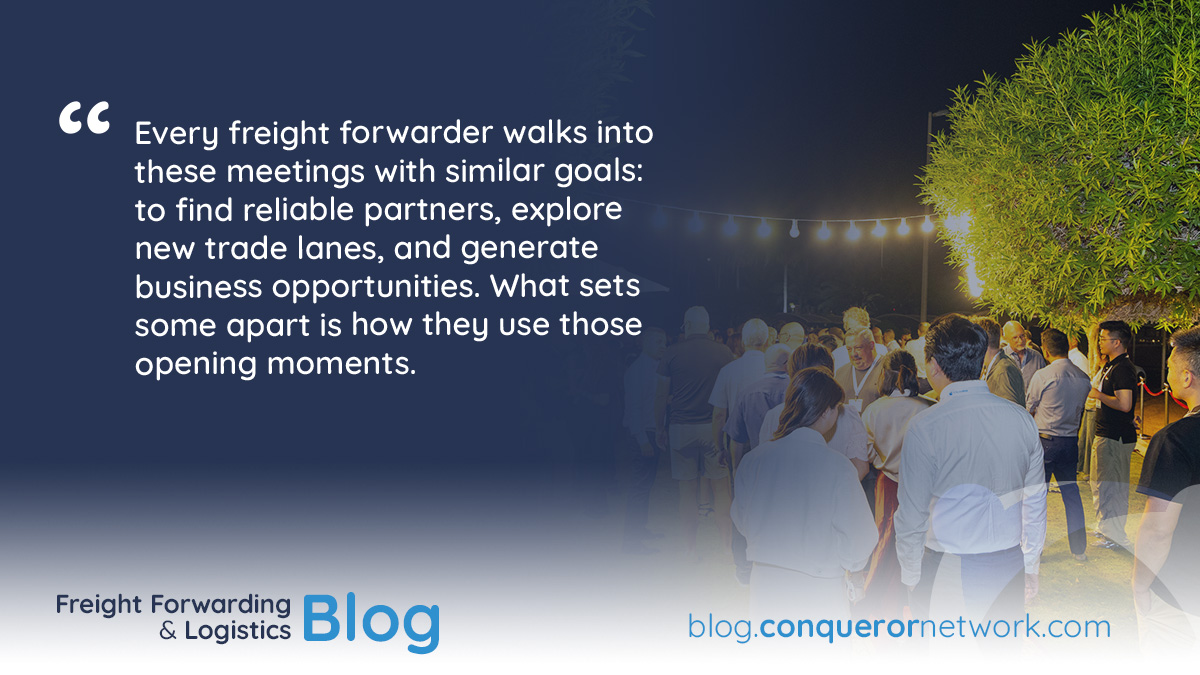
Every freight forwarder walks into these meetings with similar goals: to find reliable partners, explore new trade lanes, and generate business opportunities. What sets some apart is how they use those opening moments. The first impression in business meetings is not about rehearsed pitches or generic introductions. It’s about clarity, presence, and the ability to connect quickly in a way that feels both professional and genuine.
Why the First Five Minutes Matter in One-to-One Meetings in Freight Forwarding
Time is limited, attention is divided, and expectations are high. In a typical network meeting setup, participants move from one table to another, often holding nearly thirty meetings over the course of a few days. Within that format, the first five minutes become the anchor of the entire conversation. This is where positioning happens. A clear introduction that highlights your company’s strengths, core markets, and key services allows your counterpart to immediately understand where you fit within their network. Instead of listing everything your company does, the focus shifts to what is most relevant for the person sitting across from you. This approach aligns with effective networking strategies where relevance drives engagement.
There is also a human layer at play. People respond to energy, tone, and authenticity. A confident but approachable start creates a sense of ease, which opens the door for a more productive exchange. In freight forwarding, where trust and reliability define long-term collaboration, that initial comfort matters more than any slide deck or company brochure.
Setting the Right Tone from the Start
The opening moments of a meeting work best when they combine structure with flexibility. A concise introduction gives direction, while a natural conversational tone keeps things engaging. This balance helps avoid a transactional pitch and instead creates space for real dialogue. A strong way to begin is by briefly introducing your company with a focus on specialization. Whether it is project cargo, pharma logistics, reefer shipments, or specific trade routes, highlighting your niche immediately adds value. It signals expertise and gives the other person a clear reason to continue the conversation.
Following this, a simple transition into questions shifts the dynamic. Asking about their key markets, challenges, or current focus areas turns the meeting into a two-way exchange. This is where effective business networking begins to take shape. It becomes less about presenting and more about understanding.
Clarity Over Volume
One common pattern in business meeting tips is the tendency to share too much information too quickly. In reality, clarity carries more impact than volume. The goal in the first five minutes is to create a strong, memorable impression, not to cover every service your company offers. When conversations stay focused, they become easier to follow and more relevant. For example, if your company has a strong presence in Southeast Asia, leading with that strength allows the discussion to naturally move into trade opportunities, transit times, and local expertise. This level of specificity resonates more than a broad overview.
Clarity also builds credibility. When you communicate your strengths with precision, it signals confidence and professionalism. In international logistics networking, where partners rely on each other across borders and time zones, this clarity becomes a key factor in decision-making.
Reading the Room and Adapting Quickly
Every one-to-one meeting comes with its own context. Some participants are looking for immediate business opportunities, while others are exploring long-term partnerships. The ability to read these signals early in the conversation adds depth to your approach. This is where active listening plays a crucial role.
Paying attention to what the other person emphasizes allows you to adapt your message in real time. If they focus on a specific trade lane, you can align your experience accordingly. If they highlight challenges in a particular market, you can position your solutions in that context.
Adaptability within the first few minutes creates relevance. It shows that you are engaged, responsive, and genuinely interested in collaboration. These qualities often matter as much as operational capability when it comes to building strong freight forwarding partnerships.
Creating a Memorable Connection
In a setting where multiple meetings happen in quick succession, being remembered becomes an advantage. The first five minutes offer an opportunity to create that recall factor. This can come through a distinctive insight, a specific success story, or even a shared perspective on industry trends. For instance, discussing how shifting trade patterns or regional developments impact your operations adds depth to the conversation. It positions you as someone who understands the broader logistics landscape, not just day-to-day shipments. At the same time, authenticity remains key. Conversations that feel natural tend to leave a stronger impression than those that feel overly structured. A genuine exchange, even within a short timeframe, creates a sense of connection that carries forward beyond the meeting.
Linking the Opening to the Outcome
The first five minutes are not an isolated segment. They set the direction for everything that follows. A strong start makes it easier to move into more detailed discussions, explore specific opportunities, and identify areas of collaboration. In one-to-one meetings in freight forwarding, this progression often leads to practical outcomes such as rate discussions, service alignment, or follow-up actions. When the opening is clear and engaging, the rest of the meeting flows more naturally toward these objectives. It also makes the closing more effective. When both parties have a clear understanding of each other’s strengths and interests, summarizing next steps becomes straightforward. This could involve sharing rates, connecting specific teams, or scheduling a follow-up call after the event.
Turning Moments into Momentum
What this really comes down to is intent. The first five minutes of any meeting hold the potential to shape the entire interaction. When approached with preparation, clarity, and a focus on connection, these moments become more than just introductions. They become the starting point of meaningful business relationships.
In a fast-paced networking environment, where opportunities are measured in minutes, the ability to make an impact quickly becomes a valuable skill. It is not about saying more. It is about saying the right things, at the right time, in a way that resonates. As freight forwarders come together at global meetings, each conversation carries the possibility of future collaboration. The first five minutes simply determine how far that possibility can go.