

Conqueror’s 12th Annual Meeting may be over, but for many freight forwarders, the most important stage begins afterward. The meeting rooms in Bangkok are now quieter. The one-to-one meetings have ended. Members have returned home carrying business cards, trade lane ideas, WhatsApp contacts, and new partnership possibilities gathered over several busy days of conversations. For a short time after every logistics conference, momentum feels strong.
A forwarder in Spain remembers discussing reefer cargo opportunities with a partner in Chile. A company in Singapore plans to reconnect with an agent from Germany about automotive shipments. A freight forwarder from South Africa already sees potential collaboration with several new overseas contacts met during the event. Then daily operations return quickly.
Urgent shipments arrive, customer requests pile up and operational issues demand attention. Without proper follow-up communication, many promising conversations slowly disappear into busy inboxes. This is why follow-up emails play such an important role after a logistics network meeting. They help transform introductions into working relationships and conversations into future business opportunities.
Here are ten follow-up emails every freight forwarder should prioritize after attending Conqueror’s 12th Annual Meeting.
1. The “Great Meeting You” Email
This is usually the first and most immediate follow-up email. Its purpose is simple: maintain the familiarity created during the meeting while the interaction still feels fresh for both parties. The strongest versions feel personal rather than generic. Instead of: “Nice meeting you in Bangkok.” A stronger follow-up sounds more specific: “It was great discussing your reefer cargo operations between Latin America and Europe during our meeting in Bangkok.” That small detail immediately reconnects the conversation to a real interaction.
This email can also include:
- company presentation
- contact sheet
- operational overview
- social media links
- trade lane specialties
A prompt first email helps establish professionalism and genuine interest in future cooperation.
2. The Trade Lane Discussion Email
Many one-to-one meetings revolve around specific shipment opportunities or regional strengths. This follow-up continues those conversations while details remain clear.
For example:
A freight forwarder in Vietnam may follow up with a partner in Canada regarding growing export opportunities in electronics cargo. A company in Italy may reconnect with a member in Dubai regarding fashion logistics and warehousing support. This type of email should feel practical and focused.
Useful details include:
- major import/export markets
- cargo specializations
- regular shipping volumes
- local capabilities
- current opportunities
This moves the relationship from networking into operational alignment.
3. The Operations Team Introduction Email
Many logistics partnerships begin with strong sales conversations and later encounter delays because operational teams barely know each other. Experienced freight forwarders often avoid this by introducing operations contacts early. This email usually includes:
- operations managers
- pricing desk contacts
- customer service representatives
- after-hours support information
- documentation contacts
Imagine a shipment requiring urgent coordination across multiple time zones several weeks after the meeting. Teams who already exchanged introductions communicate more smoothly under pressure because familiarity already exists. This kind of preparation strengthens future collaboration significantly.
4. The Company Profile Email
Annual meetings move quickly. Members often meet dozens of companies across several days. A clear company profile helps partners remember your strengths once they return home.
This email can include:
- certifications
- warehouse facilities
- branch locations
- project cargo capabilities
- customs expertise
- dangerous goods handling
- local market strengths
A forwarder handling pharmaceuticals may remember the company with GDP-certified facilities. A project cargo specialist may recall the member experienced in oversized cargo coordination. Well-structured company information helps future opportunities find the right partner more easily.
5. The First Quote Request Email
One of the biggest advantages of face-to-face meetings is familiarity.When shipment opportunities arise shortly after an annual meeting, many forwarders naturally prefer contacting members they recently met in person. A freight forwarder in Turkey may receive an urgent shipment request to Mexico and immediately think about the partner they spoke with during the conference. This is where the first quote request email becomes important. It transforms networking into active business cooperation. Even a small shipment creates operational familiarity between both companies and opens the door for future collaboration.
6. The Market Insight Email
Some of the most effective follow-up emails focus on information rather than immediate business. Forwarders who share useful market updates remain visible while also positioning themselves as valuable partners.
Examples include:
- port congestion updates
- customs changes
- seasonal shipping trends
- carrier developments
- local holidays affecting operations
- warehouse capacity situations
For instance, a member in Brazil may update overseas partners about export delays during peak agricultural season. A company in Northern Europe may share information regarding new customs procedures affecting imports. This type of communication strengthens professional credibility while encouraging continued interaction.
7. The LinkedIn Connection Email
Networking today extends beyond conference halls and email inboxes. LinkedIn has become an important tool for maintaining visibility after logistics events. A thoughtful LinkedIn connection request helps preserve familiarity built during the meeting. This often leads to continued interaction, visibility into company updates, awareness of new services and future engagement opportunities. Over time, small digital interactions help keep professional relationships active between annual meetings.
8. The “Let’s Continue the Conversation” Email
Some discussions during annual meetings deserve deeper follow-up afterward. This is especially true for project cargo cooperation, cross-trade opportunities, strategic partnerships, warehousing support, and long-term trade lane development. A short follow-up video call after the event often helps both sides explore opportunities in greater detail. The strongest logistics partnerships usually grow through ongoing dialogue rather than single conversations.
9. The Post-Shipment Thank-You Email
The first successful shipment between two members represents an important milestone. A short thank-you email after completion helps strengthen the relationship further.
This email can acknowledge:
- responsiveness
- communication quality
- operational support
- problem-solving
- teamwork
In freight forwarding, reliability during actual operations builds trust far more effectively than presentations or marketing materials. The first successful shipment often transforms a network contact into a dependable long-term partner.
10. The Periodic Check-In Email
Strong logistics relationships stay active throughout the year. Months after the annual meeting, a simple check-in email helps maintain visibility and familiarity.
This can include:
- asking about new services
- discussing upcoming peak seasons
- sharing company developments
- exploring new opportunities
- reconnecting before major shipping periods
Freight forwarders who remain consistently present within their professional relationships often become the first choice when shipment opportunities arise.
The Real Value of Networking Comes Afterwards
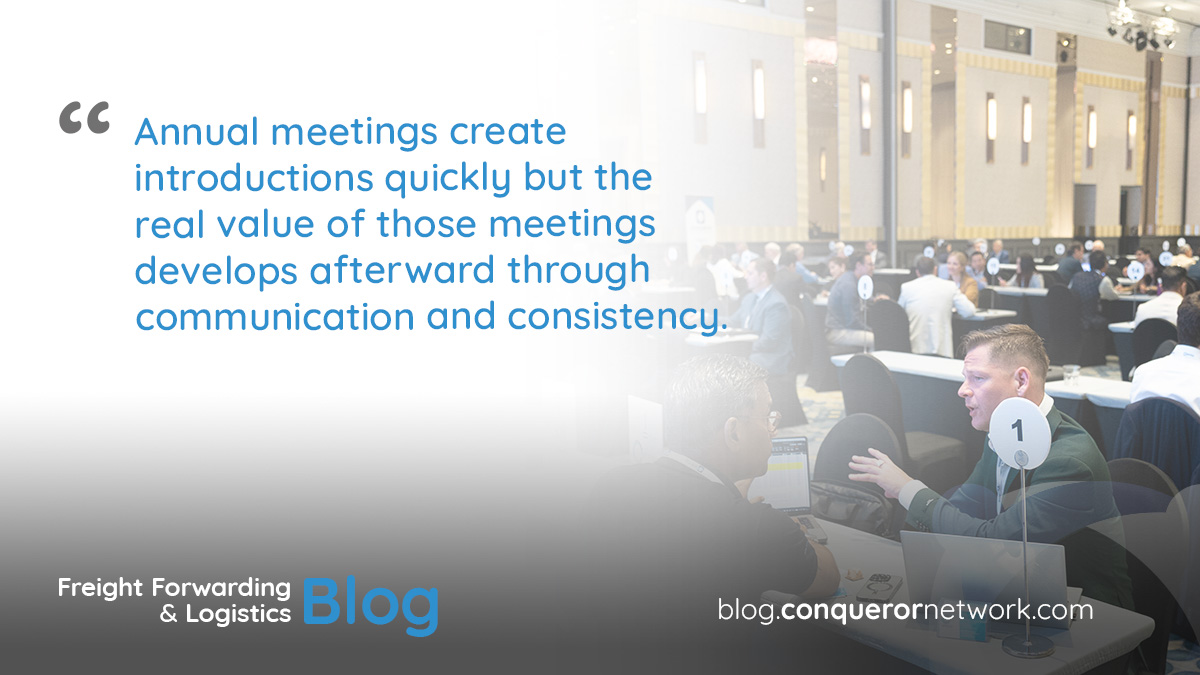
Annual meetings create introductions quickly. Over several days, freight forwarders can connect with partners from dozens of countries while discussing future collaboration opportunities across multiple trade lanes. The real value of those meetings develops afterward through communication and consistency. Every follow-up email helps strengthen familiarity. Every conversation builds operational confidence and every successful collaboration deepens trust.
Within networks like Conqueror Freight Network, these ongoing relationships help transform global connections into reliable day-to-day partnerships. Because in freight forwarding, long-term cooperation often begins with something very simple:
a thoughtful follow-up message sent at the right time.