


Live animals and time-sensitive perishables do not wait for paperwork. A day-old chick shipment held up at a transfer point for six hours is not a delay, it is a welfare failure and a financial loss. A container of live seafood sitting on a warm tarmac is not an inconvenience, it is a written-off shipment. This is why livestock and perishables forwarding demands a different level of precision than standard cargo, and why 2026 has raised the stakes higher than ever.
IATA rolled out the 52nd edition of its Live Animals Regulations on January 1, 2026, and it is not a minor refresh. Regulators have spent years watching the same compliance gaps repeat themselves, especially around CR1 containers used for wild and exotic species, and the new edition closes those gaps with sharper technical detail, tougher training requirements, and less room for interpretation. For forwarders who treat live animal regulations as a checklist to skim, this is the edition that catches you out.
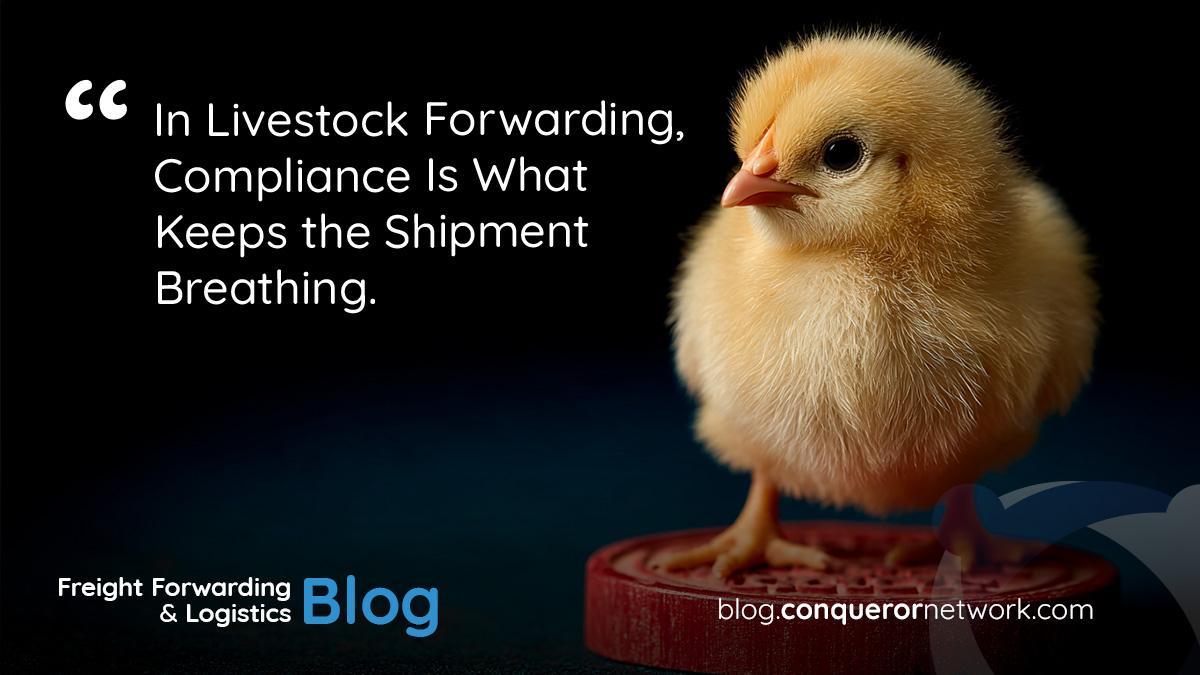
What Changed in the 2026 IATA Live Animals Regulations
The headline issue is container misuse. CR1 containers, the specialized units built for wild and exotic species, have long been a source of confusion. Forwarders and shippers have repeatedly placed animals in containers that technically fit the category but do not fit the species. The 52nd edition responds with clearer illustrations, updated symbol guidance, and explicit direction on when rigid plastic construction is acceptable. The goal is simple: align what forwarders think they are doing with what the regulation actually requires.
Beyond containers, the update tightens several other areas that matter to anyone running livestock and perishables forwarding operations at scale:
- Density and ventilation specifications for day-old chicks, addressing a category where margins for error are measured in hours, not days
- New rules for brachycephalic breeds, reflecting heightened scrutiny of animal welfare shipping standards for short-nosed dog and cat breeds prone to respiratory stress
- Updated live seafood transport requirements, extending the regulation’s reach into a category that has historically operated with looser oversight
- Formal, competency-based staff training requirements, replacing informal familiarity with documented certification
- A terminology shift from “reservation” to “booking”, aligning live animal logistics with mainstream air cargo systems, small on the surface but part of a broader push to integrate this category into standard operational frameworks
Together, these changes signal that IATA is done treating the LAR as a reference manual and is turning it into a strictly enforced operational benchmark.
Where Forwarders Actually Lose Shipments
Ask any experienced forwarder in this space and they will tell you the failures rarely come from ignorance of the big rules. They come from the details that get treated as afterthoughts.
Take animal health certification. A veterinary health certificate for export is not a formality, it is a legal precondition for the shipment to move at all, and it has an expiry window that does not care about your flight schedule. Miss the window by a day and the shipment is grounded, the animal is stressed, and the client is furious. The same discipline applies to CITES export documentation for any species covered under international trade restrictions. Get the permit classification wrong and customs will not negotiate.
Consider a live racehorse export from Europe to the Middle East. The shipment needs a valid veterinary health certificate timed precisely against departure, a CR3 or equivalent container rated for the animal’s size and temperament, a groom accompanying the shipment per IATA requirements, and documentation that satisfies both origin and destination veterinary authorities. Any one of these pieces failing means the horse does not fly on schedule, and rebooking a live animal shipment is nothing like rebooking a pallet of electronics.
Now take a live seafood export, lobster moving from Atlantic Canada to Asian markets. This shipment lives and dies by cold chain compliance for perishables and by strict adherence to IATA Perishable Cargo Regulations for packaging, insulation, and transit time limits. Add the 2026 update’s sharpened live seafood transport rules, and forwarders who were previously operating on loose custom are now working against a defined standard with real enforcement teeth.
Livestock and Perishables Forwarding Is Not a Side Category
Too many forwarders treat livestock and perishables forwarding as a niche add-on to their core service, something they handle occasionally and manage with general cargo know-how. That approach does not survive contact with the 2026 regulatory environment. This category demands dedicated expertise: current knowledge of IATA live animal regulations, working relationships with accredited veterinarians for health certification, verified cold chain infrastructure, and staff who are trained to the new competency standards, not just familiar with the paperwork.
The forwarders who win in this space are the ones who build systems around these requirements instead of scrambling to meet them shipment by shipment. That means pre-vetted container suppliers who meet the updated CR1 specifications, veterinary contacts who understand export certification timelines, and internal SOPs that get updated the moment IATA issues an addendum, because addenda drop throughout the year and an outdated checklist is a liability.
How Being a Part of a Reliable Network Can Help
Clients moving livestock, perishables, or high-value biological cargo are not shopping for the cheapest forwarder. They are shopping for the one who will not get their shipment grounded, fined, or rejected at the border. Compliance depth is a competitive differentiator in this category, and it is one that smaller, generalist forwarders struggle to match.
This is exactly where Conqueror Freight Network members have an edge. Being part of a network built on selectivity and operational sharpness means access to partners who already handle the complexity of animal health certification, IATA Perishable Cargo Regulations, and cold chain logistics across multiple regions. When a client brings you a livestock or perishables shipment that falls outside your direct expertise, your network partners fill that gap instead of you turning the business away.
Freight forwarding rewards forwarders who move fast and decisively, but livestock and perishables forwarding punishes anyone who moves fast without precision. The 2026 regulatory tightening is not going away, and neither is client demand for forwarders who can handle this category without flinching. Build the compliance muscle now, lean on your network where you need to, and turn a high-risk category into a high-margin specialty.