

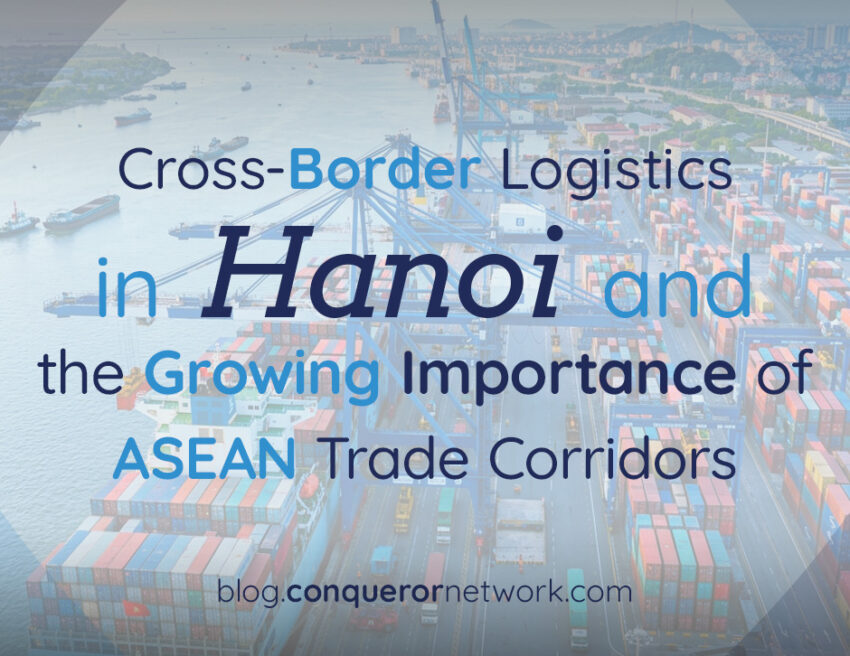
Global supply chains across Asia are undergoing a major transformation. Manufacturing diversification, regional trade integration, infrastructure investment, and evolving sourcing strategies are reshaping cargo flows throughout Southeast Asia. As businesses seek greater flexibility and supply chain resilience, ASEAN trade corridors are becoming increasingly important for freight forwarders managing cross-border transportation across the region. Within this evolving landscape, cross-border logistics in Hanoi is emerging as a strategic component of regional supply chain operations.
Vietnam’s capital has gradually evolved beyond its traditional administrative role to become one of the most important logistics and manufacturing gateways in Northern Vietnam. Located close to China and connected to major ASEAN trade routes, Hanoi now sits at the intersection of regional manufacturing, inland transportation, and international freight forwarding. For logistics companies operating in the region, this creates significant opportunities across road transport, rail freight, multimodal logistics, warehousing, and customs coordination.
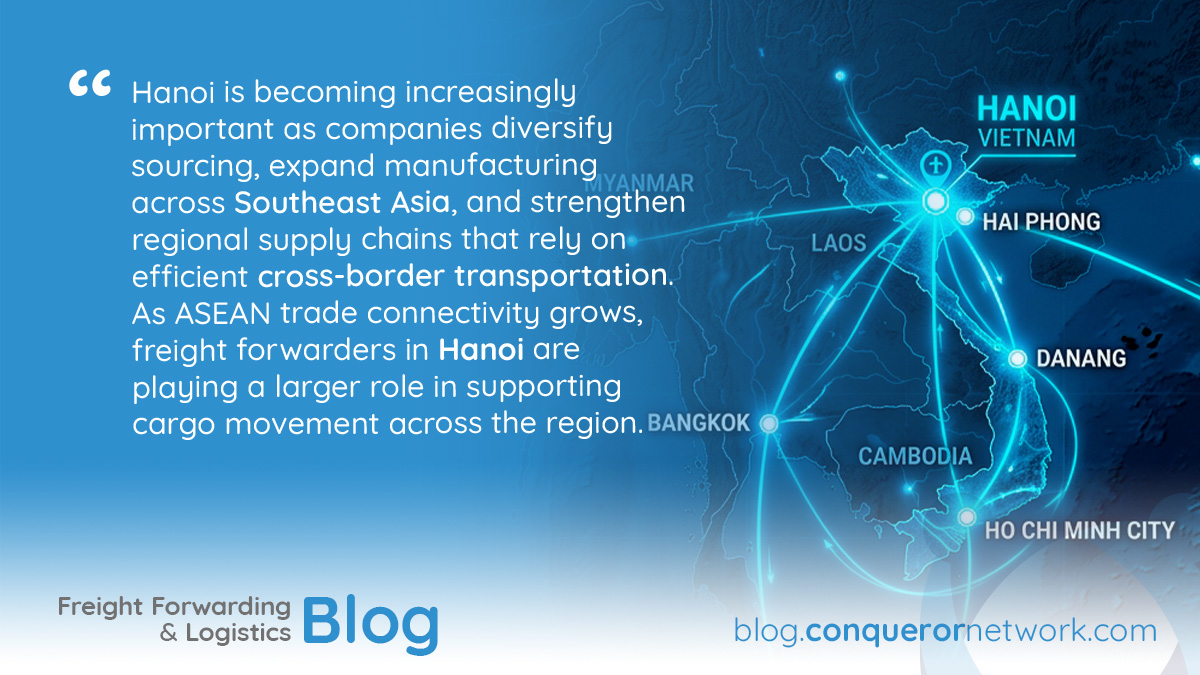
What makes Hanoi particularly important today is the way regional trade patterns are changing. Companies are diversifying sourcing strategies, expanding manufacturing operations across Southeast Asia, and strengthening regional supply chains that depend heavily on efficient cross-border transportation. As ASEAN economies become more interconnected, freight forwarders in Hanoi are playing an increasingly important role in supporting cargo movement throughout the region.
Why ASEAN Trade Corridors Are Becoming Increasingly Important
The Association of Southeast Asian Nations has become one of the world’s fastest-growing economic regions. Expanding manufacturing activity, rising intra-Asian trade, and continued infrastructure investment are strengthening commercial connectivity between ASEAN member states and neighboring economies such as China. Trade corridors across Southeast Asia are becoming more dynamic as businesses seek alternatives to concentrated sourcing models. Manufacturers operating in electronics, textiles, automotive components, industrial equipment, and consumer goods are increasingly distributing production across multiple ASEAN markets. This shift is creating more complex regional transportation networks that rely heavily on cross-border coordination.
Road freight remains especially important within ASEAN logistics operations. Cargo frequently moves between Vietnam, Thailand, Cambodia, Laos, Malaysia, and China through interconnected trucking corridors supported by inland customs checkpoints and multimodal transport systems. Rail freight is also gaining attention as infrastructure development improves regional connectivity between manufacturing hubs and inland distribution centers.
At the same time, ASEAN governments continue investing in transportation infrastructure designed to strengthen regional trade integration. Highway expansion projects, border modernization programs, rail development initiatives, and port upgrades are improving cargo mobility throughout Southeast Asia. These developments are gradually reshaping how freight moves across the region and increasing the strategic importance of inland logistics hubs such as Hanoi.
Cross-Border Logistics in Hanoi and Vietnam’s Strategic Position
Vietnam occupies a highly strategic position within Southeast Asia’s evolving logistics environment. The country connects China with the broader ASEAN region while offering strong access to maritime trade routes across the South China Sea. This positioning has helped transform Vietnam into one of Asia’s fastest-growing manufacturing and export economies.
Hanoi plays a particularly important role within Northern Vietnam’s logistics structure. Located near major industrial zones and connected to key cross-border transport corridors, the city supports cargo movement between Vietnam, China, and neighboring ASEAN markets. Freight forwarders operating in Hanoi regularly coordinate shipments involving road transportation, rail freight, customs clearance, warehousing, and multimodal logistics solutions.
The city’s proximity to China creates additional advantages for manufacturers and logistics providers managing regional supply chains. Cargo can move relatively efficiently between Southern China and Northern Vietnam through established border crossings and inland transportation routes. This supports manufacturing operations that rely on regional supplier networks spanning multiple countries.
Cross-border logistics in Hanoi has become especially relevant for industries requiring flexible transportation planning and efficient regional distribution. Electronics manufacturing, industrial machinery, textiles, automotive components, and consumer goods all contribute to growing freight volumes moving through Northern Vietnam. As production activity continues expanding across the region, demand for coordinated inland logistics solutions is increasing as well.
Noi Bai International Airport also contributes to Hanoi’s growing logistics importance by supporting air cargo operations tied to time-sensitive exports and industrial supply chains. Combined with nearby seaport access through Northern Vietnam’s maritime gateways, Hanoi benefits from a highly integrated transportation environment capable of supporting multiple cargo types and distribution strategies.
The Growing Complexity of Regional Freight Forwarding
As ASEAN trade corridors become more interconnected, freight forwarding operations are becoming increasingly complex. Cargo movement across Southeast Asia frequently involves multiple border crossings, varying customs procedures, different regulatory frameworks, and highly dynamic transportation conditions.
For freight forwarders, managing these operations requires strong coordination across every stage of the shipment lifecycle. Customs documentation, inland trucking schedules, warehouse coordination, cargo visibility, and carrier communication all influence delivery performance throughout regional supply chains.
Cross-border transportation in Southeast Asia also introduces geographic and infrastructure-related challenges. Mountainous terrain, border congestion, weather disruptions, and uneven infrastructure conditions can affect transit reliability and transportation planning. Freight forwarders operating across ASEAN markets must remain highly adaptable while maintaining close communication with carriers, customs brokers, and overseas partners.
This growing complexity is increasing the importance of operational flexibility and local expertise. Freight forwarders capable of navigating regional regulations, understanding local market conditions, and coordinating multimodal transportation efficiently create substantial value for customers managing international cargo flows.
Cross-border logistics in Hanoi reflects this broader transformation taking place across Southeast Asia. Freight forwarders in the city increasingly serve as coordination hubs connecting suppliers, manufacturers, inland transport providers, customs authorities, and overseas partners throughout the ASEAN region.
Multimodal Transportation Is Reshaping ASEAN Logistics
One of the most important developments across Southeast Asian logistics is the growing role of multimodal transportation. Companies are increasingly combining road freight, rail transport, maritime shipping, and air cargo to optimize regional supply chains and improve transportation flexibility.
Inland trucking continues to dominate regional cargo movement, particularly for cross-border distribution between neighboring ASEAN countries. At the same time, rail freight is receiving greater attention as governments expand regional railway infrastructure and strengthen trade connectivity between China and Southeast Asia.
Vietnam’s rail connections with China are gradually becoming more important within regional supply chains, particularly for industrial cargo and manufacturing-related shipments. Rail freight offers additional flexibility for companies seeking alternatives to congested maritime routes or long-haul trucking operations.
Maritime transport also remains essential for ASEAN trade flows. Northern Vietnam’s port infrastructure supports containerized cargo movement connecting Southeast Asia with global markets across Europe, North America, and the broader Asia-Pacific region.
For freight forwarders, managing multimodal transportation requires highly coordinated planning across multiple transportation providers and operational environments. Shipment visibility, cargo scheduling, customs coordination, and communication between partners all become increasingly important as supply chains grow more interconnected.
Why Reliable International Partnerships Matter
As regional supply chains become more complex, international logistics partnerships are becoming increasingly valuable for freight forwarders operating in Hanoi. Cross-border shipments depend heavily on coordination between overseas agents, customs specialists, inland carriers, warehouse operators, and destination partners. This is where joining a global network like Conqueror Freight Network creates a major operational advantage.
Through Conqueror Freight Network, independent freight forwarders gain access to carefully vetted logistics partners in nearly 250 ctities across key global markets. Instead of relying on unfamiliar overseas contacts, members work within a structured network built around operational reliability, communication, and long-term collaboration.
For freight forwarders managing cross-border logistics in Hanoi, these partnerships improve coordination across regional and international shipments while strengthening visibility throughout the supply chain. Access to trusted overseas agents helps companies navigate customs procedures, maintain cargo consistency, and respond more efficiently to operational disruptions.
Conqueror Freight Network also helps members strengthen their visibility within the global freight forwarding industry through Annual Meetings, member cooperation programs, digital networking opportunities, and collaborative business development initiatives. These face-to-face relationships remain particularly important in freight forwarding, where trust and communication continue to shape long-term operational success.
As ASEAN trade corridors continue expanding, freight forwarders with strong international partnerships and reliable regional coordination will be better positioned to support evolving cargo flows across Southeast Asia.
The Future of ASEAN Logistics Will Depend on Adaptability
The logistics landscape across Southeast Asia continues to evolve rapidly. Manufacturing diversification, infrastructure development, geopolitical shifts, and changing sourcing strategies are reshaping trade flows throughout the ASEAN region at an accelerating pace. In this environment, flexibility and coordination are becoming central to successful freight forwarding operations. Businesses increasingly require logistics partners capable of adapting quickly to changing transportation conditions while maintaining visibility and consistency across regional supply chains.
Hanoi’s role within this transformation will likely continue growing. The city’s strategic position, manufacturing connectivity, inland transportation access, and regional trade links make it an increasingly important logistics hub within Southeast Asia’s expanding trade environment. For freight forwarders, the future of ASEAN logistics will depend heavily on operational agility, strong international partnerships, and the ability to coordinate increasingly interconnected supply chains. As regional trade corridors continue developing, companies capable of combining local expertise with global logistics networks will play an increasingly important role in shaping the next phase of Southeast Asian freight forwarding.