

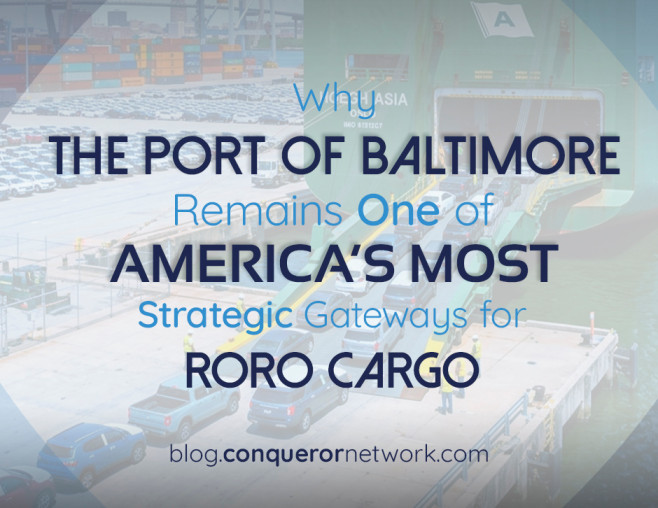
When discussing major U.S. gateways for international trade, attention often gravitates toward larger container ports such as Los Angeles, Long Beach, New York, and Savannah. Yet some of the country’s most important cargo movements take place outside the container sector. For vehicle imports, heavy machinery, agricultural equipment, and project cargo, the Port of Baltimore continues to play a uniquely strategic role. While it may not always dominate logistics headlines, Baltimore has built a reputation as one of the most efficient and specialized Roll-On/Roll-Off (RoRo) gateways in the United States. For decades, shipping lines, freight forwarders, equipment manufacturers, and project cargo specialists have relied on the port’s extensive infrastructure and operational expertise to move wheeled and oversized cargo safely and efficiently. In an increasingly complex supply chain environment, Baltimore’s strengths remain as relevant as ever.
Understanding the Importance of RoRo Cargo
Unlike containerized freight, RoRo cargo consists of vehicles and equipment that can be driven, towed, or rolled directly onto and off vessels. This category includes automobiles, trucks, buses, agricultural machinery, construction equipment, mining vehicles, military equipment, and a wide range of project cargo. RoRo shipping offers several advantages. It reduces cargo handling requirements, minimizes the need for disassembly, shortens loading and unloading times, and can lower transportation costs for oversized equipment. As industries worldwide continue to invest in infrastructure, energy projects, agriculture, and manufacturing, demand for RoRo services remains strong. This makes specialized ports with proven RoRo capabilities increasingly valuable.
Why the Port of Baltimore Continues to Stand Out
The success of Baltimore in the RoRo sector is not accidental. The port has spent decades developing infrastructure and operational expertise specifically designed for handling wheeled and oversized cargo. Its terminals provide extensive acreage for vehicle storage, equipment staging, and cargo preparation. Specialized facilities allow for the efficient movement of everything from passenger vehicles to massive construction machinery. For shipping lines and freight forwarders, this translates into smoother operations, faster turnaround times, and reduced risk of cargo damage. Unlike ports primarily focused on container traffic, Baltimore’s long-standing specialization allows it to handle complex RoRo shipments with a level of efficiency that many competitors struggle to match.
A Preferred Gateway for Vehicle Imports
One of Baltimore’s greatest strengths lies in automobile logistics. Every year, hundreds of thousands of imported vehicles pass through the port before being distributed throughout North America. Major automotive manufacturers have long recognized Baltimore’s strategic location, efficient cargo handling processes, and excellent inland transportation connections.
For importers, speed and reliability are essential. Vehicles must move quickly from vessel discharge to processing facilities and onward to dealerships and customers. Baltimore’s established automotive logistics ecosystem helps streamline these operations, making it one of the most attractive gateways for vehicle imports on the U.S. East Coast.
Supporting Heavy Equipment and Industrial Cargo
The port’s importance extends well beyond passenger vehicles. Construction equipment, mining machinery, cranes, industrial vehicles, and specialized heavy equipment frequently move through Baltimore because of its ability to accommodate oversized and high-value cargo. Unlike standard container shipments, heavy equipment often requires specialized handling procedures, secure storage areas, route planning, and coordinated inland transportation. The port’s infrastructure is particularly well suited for these requirements. Freight forwarders managing large-scale industrial projects often view Baltimore as a practical solution because it combines RoRo expertise with strong inland connectivity. As infrastructure investments continue across North America, demand for these capabilities is likely to remain strong.
Agricultural Machinery Finds a Natural Home in Baltimore
Agricultural equipment represents another important segment of RoRo traffic. Tractors, harvesters, sprayers, and other farming machinery are frequently imported through Baltimore before being distributed across agricultural regions throughout the United States and Canada. These shipments often involve large dimensions, specialized handling requirements, and seasonal delivery schedules. The ability to process equipment efficiently and move it quickly to inland destinations can have a direct impact on agricultural operations. Baltimore’s experience in handling farm equipment has made it a preferred gateway for manufacturers and distributors seeking reliable transportation solutions.
The Port of Baltimore and Project Cargo Operations
One of the less discussed but equally important aspects of the Port of Baltimore is its role in supporting project cargo operations. Large-scale infrastructure, energy, manufacturing, and industrial projects frequently require the transportation of oversized components that cannot be containerized. These shipments may include turbines, generators, transformers, construction machinery, and other high-value assets. Project cargo logistics requires careful planning and coordination. Every shipment involves unique dimensions, transportation challenges, and delivery requirements. Baltimore’s ability to handle oversized cargo, combined with its extensive transportation network, makes it an attractive option for project logistics specialists seeking dependable solutions for complex shipments.
Strategic Location and Inland Connectivity
A port’s value extends beyond its waterfront facilities. What happens after cargo is discharged often matters just as much. Baltimore benefits from excellent access to major highways, rail networks, and distribution corridors serving the U.S. Northeast, Mid-Atlantic region, and Midwest. This strategic location enables cargo owners to reach key consumer and industrial markets quickly and efficiently. For freight forwarders, reduced inland transportation times can generate significant cost savings while improving service reliability. The ability to connect imported cargo with major economic centres remains one of Baltimore’s strongest competitive advantages.
Why Conqueror Members Benefit from a Strong Baltimore Presence
For freight forwarders operating in Baltimore, building a dependable network of overseas partners from scratch can be a slow and resource-intensive process. A global logistics network offers immediate access to trusted agents across major international markets, allowing forwarders to handle cross-border shipments with greater efficiency and confidence. Instead of searching for new partners for every movement, members collaborate within a community built on reliability, accountability, and long-term cooperation.
Conqueror Freight Network, the largest exclusive freight forwarders network in the world, provides this advantage by connecting members with carefully selected logistics companies in key trade hubs worldwide. This enables Baltimore-based forwarders to manage everything from routine shipments to complex logistics projects, backed by experienced partners who understand local regulations and operational requirements.
As one of the busiest ports on the U.S. East Coast and an important gateway for international trade, Baltimore handles a diverse range of cargo, including automobiles, heavy machinery, project cargo, chemicals, consumer goods, and refrigerated products. Many shipments move through multiple transport modes before reaching their final destinations, making seamless coordination essential. In this environment, having access to a trusted global network allows freight forwarders to provide consistent service, improve communication, and maintain visibility throughout the supply chain.
Territorial Exclusivity
Conqueror follows an exclusive membership model, accepting only one agent per city or port. For freight forwarders in Baltimore, this means representing the city exclusively within the network, increasing visibility among overseas members and reducing local competition. When international partners require reliable logistics support in Baltimore, they connect directly with a single trusted representative, creating stronger collaboration opportunities and a steady flow of inbound business.
Expand Your Global Reach
Baltimore serves as a strategic gateway for trade between North America, Europe, Latin America, and Asia, supported by its deep-water port, rail connectivity, and proximity to major U.S. markets. Conqueror strengthens this position by connecting independent freight forwarders across nearly 250 cities in more than 135 countries. Members can confidently extend their services worldwide while working with local partners who understand regional customs procedures, compliance requirements, and market conditions.
Access to New Business Opportunities
Baltimore’s diverse cargo profile creates opportunities across multiple industries, from automotive logistics and project cargo to refrigerated goods, manufacturing equipment, and retail products. Conqueror actively promotes collaboration among its members, encouraging shipment referrals, joint projects, and long-term business partnerships. This creates valuable opportunities for Baltimore freight forwarders to expand their international client base and participate in specialized logistics movements that require trusted global coordination.
Technology, Visibility, and Operational Support
Success in modern freight forwarding depends on speed, efficiency, and visibility. Conqueror equips its members with practical digital tools such as FreightViewer, an online quotation platform that enables freight forwarders to prepare competitive freight rates quickly and respond faster to customer inquiries.
The network also enhances member visibility through continuous marketing and public relations initiatives, including newsletters, company features, digital campaigns, and industry-focused publications. These activities help position members as reliable international logistics partners while increasing their exposure within the global freight forwarding community.
Beyond technology and marketing, Conqueror’s head office provides ongoing operational support, assisting members with communication, coordination, and issue resolution whenever needed. The network’s Payment Protection Plan adds another layer of business security by helping safeguard financial transactions and strengthening confidence between international partners.
Face-to-Face Relationships That Drive Long-Term Growth
Freight forwarding remains a relationship-driven industry where trust and personal connections often determine long-term success. Conqueror’s Annual Meetings bring members together for structured one-to-one business discussions, creating opportunities to build lasting partnerships with freight forwarders from around the world.
For companies operating in Baltimore, these meetings provide a valuable platform to explore new trade lanes, discuss specialized logistics solutions, exchange market insights, and strengthen international collaboration. In an industry where reliable partnerships can make the difference between winning and losing business, these face-to-face connections become a significant competitive advantage.
Looking Ahead
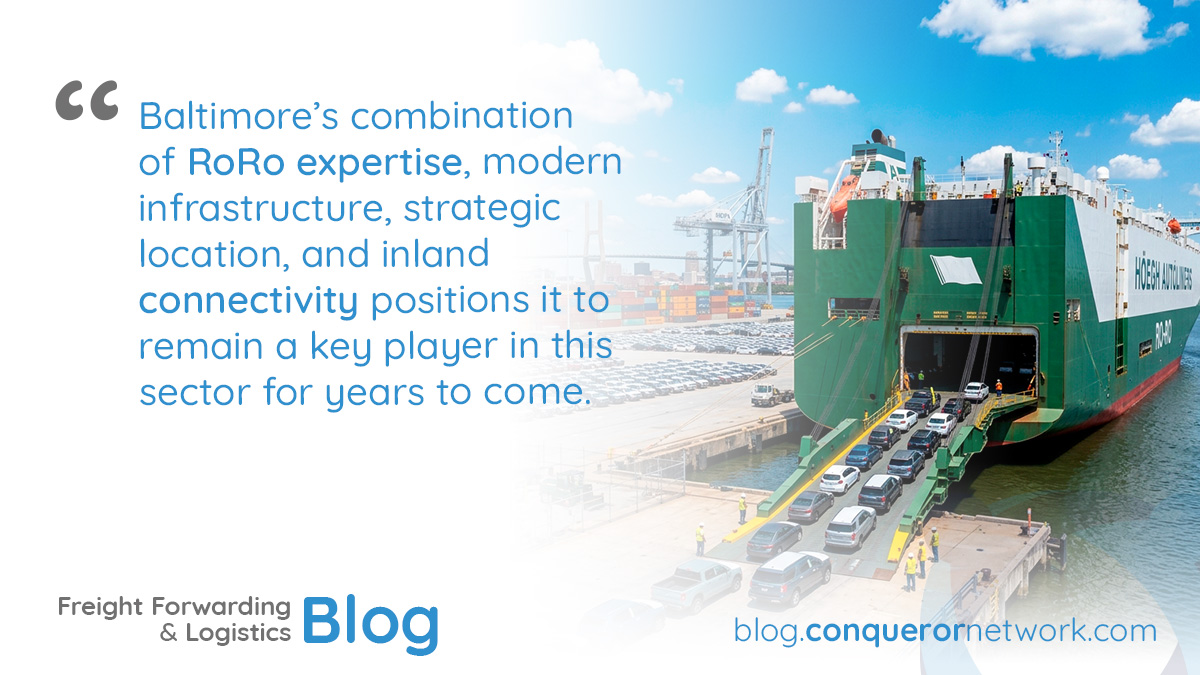
Global supply chains continue to evolve, but the need for specialized RoRo gateways remains constant. As industries invest in infrastructure, manufacturing, agriculture, and energy projects, the movement of vehicles and heavy equipment will remain an essential component of international trade. Baltimore’s combination of RoRo expertise, modern infrastructure, strategic location, and inland connectivity positions it to remain a key player in this sector for years to come.
While larger ports may capture more attention, freight professionals understand that success often depends on choosing the right gateway for the cargo being moved. For automobiles, heavy machinery, agricultural equipment, and project cargo, Baltimore continues to demonstrate why it remains one of America’s most valuable logistics assets.