
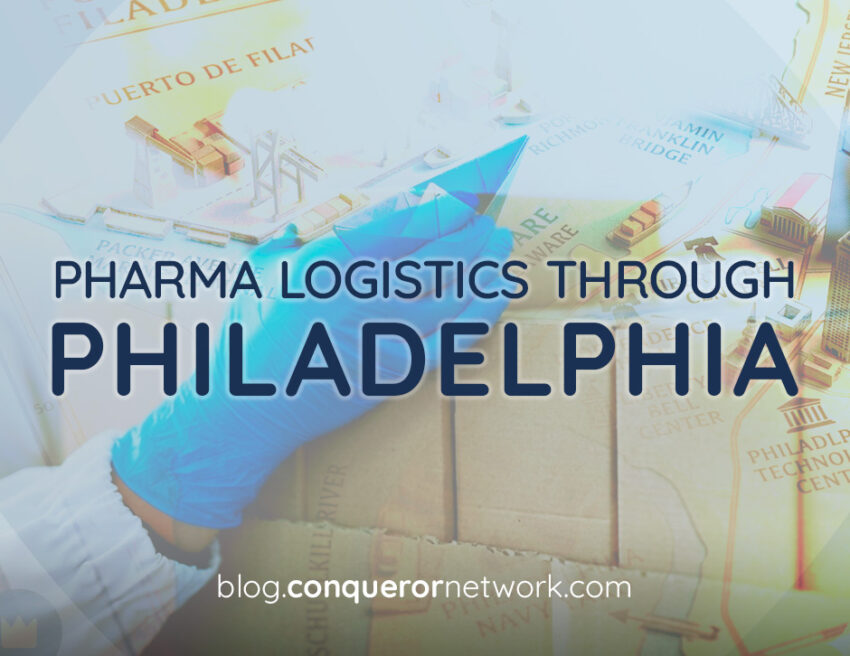
For companies handling high-value, temperature-sensitive cargo, pharma logistics through Philadelphia has become an important part of transatlantic and domestic supply chains. The region’s strong life sciences base, combined with established cold chain infrastructure, makes it a natural gateway for pharmaceutical shipments moving into and out of the United States. At the same time, pharma logistics operates under a different level of pressure. Unlike standard cargo, there is very little margin for error. A delay, a temperature deviation, or a documentation issue can have immediate financial and regulatory consequences. What looks like a routine shipment on paper often involves multiple risk points in practice. Understanding where things can go wrong is what separates a smooth operation from a costly disruption.
Why Pharma Logistics Through Philadelphia Is So Critical
Philadelphia sits at the center of one of the largest pharmaceutical and healthcare clusters in the US. This creates a constant flow of inbound and outbound shipments, ranging from clinical trial materials to finished products. The Port of Philadelphia plays a key role in handling temperature-sensitive cargo, supported by specialized facilities and proximity to major distribution centers. Air freight through nearby hubs adds another layer of flexibility for time-critical shipments. For freight forwarders, this environment offers both opportunity and complexity. The volume is there. The infrastructure is there. What determines success is execution.
Pharma Logistics Through Philadelphia: Where Things Can Go Wrong
Even with strong infrastructure, pharma logistics through Philadelphia involves multiple handovers. Each stage introduces potential points of failure.
Temperature deviations
Maintaining strict temperature ranges is central to pharmaceutical logistics. A short delay on the tarmac, a mismanaged warehouse transfer, or incorrect packaging can lead to temperature excursions. In many cases, that means the cargo is no longer usable. What makes this challenging is that temperature control depends on coordination across all parties involved. It is not enough for one link in the chain to perform well.
Documentation and compliance gaps
Pharmaceutical shipments are subject to strict regulatory requirements. Missing or incorrect documentation can delay customs clearance or trigger inspections. These delays can quickly escalate into larger issues when combined with temperature sensitivity. Different markets also follow different compliance standards, which adds another layer of complexity when shipments originate or transit through multiple countries.
Timing mismatches
Pharma shipments are often time-critical. Clinical trial materials, vaccines, and specialty drugs may have limited shelf life or strict delivery windows. A delay at origin, a missed connection, or slow coordination at destination can disrupt the entire timeline. In a high-volume environment like Philadelphia, even small timing gaps can create ripple effects.
Communication breakdowns
One of the most common issues is also one of the least visible. Poor communication between origin and destination partners can lead to misaligned expectations, incorrect handling instructions, or delayed responses when issues arise. In pharma logistics, where conditions need to be monitored continuously, delayed communication can make it difficult to take corrective action in time.
The Pressure of Multi-Party Coordination
A typical pharma shipment moving through Philadelphia involves several stakeholders: origin forwarders, airlines or shipping lines, ground handlers, customs brokers, and final delivery partners. Each party plays a specific role, and the overall success depends on how well these roles are aligned. When coordination is strong, the process feels seamless. When it is not, even minor issues can escalate quickly. For freight forwarders, managing this level of coordination consistently is one of the biggest operational challenges. It requires not just process knowledge, but reliable partnerships across all touchpoints.
Why Reliable Partnerships Make the Difference
This is where the gap between average and high-performing forwarders becomes clear. Forwarders who handle pharma logistics effectively do not rely on ad hoc arrangements. They work with partners they know, trust, and have experience with. This reduces uncertainty and allows for faster decision-making when issues arise.
For those looking to strengthen their capabilities, joining a global network like Conqueror Freight Network provides a structured way to build these partnerships. Instead of searching for agents on a shipment-by-shipment basis, forwarders gain access to a vetted group of partners across key pharmaceutical markets. This matters in practical terms. When dealing with temperature-sensitive cargo, there is little time to verify capabilities or resolve misunderstandings. Working within a trusted network helps ensure that all parties involved understand the requirements and can execute accordingly.
It also creates consistency. Clients value predictability, especially in pharma logistics. Knowing that the same level of service will be maintained across different markets builds confidence and long-term relationships.
Scaling Pharma Operations with Confidence
As pharmaceutical trade continues to grow, so does the demand for reliable logistics solutions. Philadelphia is likely to remain a key hub in this ecosystem, supported by its infrastructure and industry presence. For freight forwarders, the opportunity lies in scaling operations without compromising quality. This requires a shift from reactive problem-solving to proactive planning. It means investing in processes, strengthening communication channels, and working with partners who can deliver consistently under pressure. In this context, networks like Conqueror Freight Network are not just about connectivity. They are about building a framework that supports growth while maintaining control over service quality.
Looking Ahead
Pharma logistics is one of the most demanding segments in freight forwarding. The stakes are high, and expectations continue to rise. Philadelphia offers the infrastructure and positioning needed to support this sector. What determines success is how forwarders navigate the complexities behind the scenes. Understanding what can go wrong is the first step. Building the right partnerships is what turns that understanding into reliable performance. For those already operating in this space, the focus is shifting from handling shipments to building systems that can support them consistently. That is where long-term advantage lies.