

The growing trade relationship between the United States and Mexico is creating new opportunities for freight forwarders across North America. For logistics companies in Arizona, Phoenix to Mexico freight represents an important opportunity to connect manufacturers, distributors, suppliers, and customers across borders. With its strategic location, established highway network, and access to Arizona’s commercial ports of entry, Phoenix can serve as a valuable starting point for businesses moving goods between the U.S. Southwest and Mexico. However, cross-border shipping involves more than arranging transportation. Customs procedures, documentation, carrier coordination, border processing, and communication between logistics partners all influence how smoothly a shipment reaches its destination. For international freight forwarders, understanding these requirements and building dependable partnerships on both sides of the border can make a significant difference.
Why Phoenix Matters in the U.S.-Mexico Freight Corridor
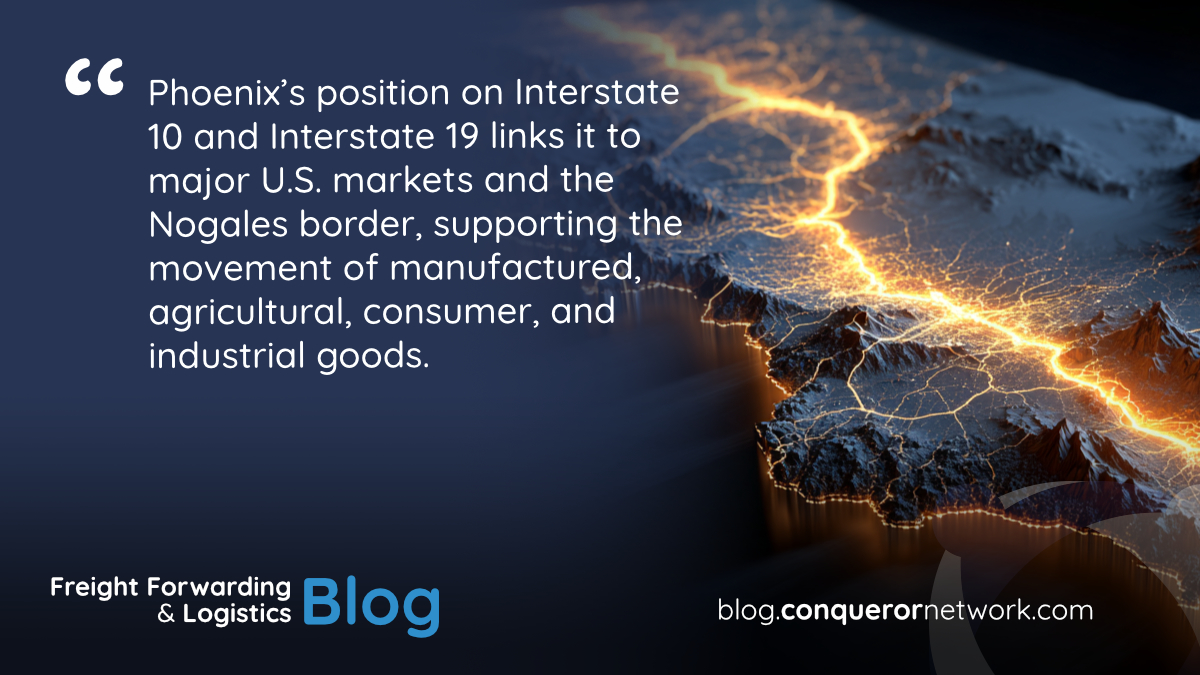
Phoenix benefits from its position within Arizona’s extensive freight transportation network. Interstate 10 connects the metropolitan area with major U.S. markets, while Interstate 19 links southern Arizona with the Nogales border region. Together with other regional highways, these routes support the movement of manufactured goods, agricultural products, consumer merchandise, and industrial materials.
Mexico is Arizona’s largest international trading partner, and the state’s border infrastructure plays a significant role in facilitating bilateral commerce. According to the Arizona Department of Transportation, cross-border trade relies heavily on trucking, although rail also contributes to freight movements between the two countries. For freight forwarders, this creates opportunities to coordinate shipments originating in Phoenix and other Arizona distribution centers for delivery into Mexico, as well as inbound cargo moving north from Mexican suppliers.
Industries such as manufacturing, agriculture, automotive supply, electronics, and consumer goods can generate different transportation requirements. Some shipments may call for full truckload services, while others may be better suited to consolidated cargo or multimodal arrangements. Understanding the cargo, destination, delivery deadline, and handling requirements is essential when choosing the most appropriate solution.
Phoenix to Mexico Freight: Key Routes and Opportunities
One of the most important considerations when planning cross-border shipments across the US Mexico freight corridor is selecting the appropriate route and port of entry. Arizona has six land ports of entry along its border with Mexico, with Nogales, San Luis, and Douglas among the key gateways for commercial trade. Each gateway serves different regional supply chains, so the best option depends on the shipment’s origin, destination, commodity, and transportation arrangements.
Nogales: A Key Gateway for Cross-Border Trade
Nogales is particularly important for Arizona’s international freight activity. The Mariposa Port of Entry handles commercial truck traffic and supports the movement of fresh produce, manufactured goods, vehicles, raw materials, and other commodities. The region also offers road and rail connections linking Arizona with destinations in Mexico. For forwarders handling agricultural shipments, manufacturing inputs, or general cargo, the Nogales corridor can provide access to established cross-border supply chains. However, route selection should account for border processing requirements, inspection procedures, operating schedules, and the availability of suitable carriers.
San Luis and Douglas: Alternatives for Regional Shipments
San Luis and Douglas can also be relevant, depending on the location of the shipper or consignee and the intended delivery destination. Rather than assuming that one crossing is always the fastest or most economical, forwarders should compare available routes and consider the full journey from pickup to final delivery. A reliable local transportation partner can help evaluate these options and identify practical alternatives when congestion, operational constraints, or shipment requirements affect the original plan.
Managing Customs and Documentation for Cross-Border Shipments
Customs coordination is one of the most important parts of international freight forwarding. Even when transportation capacity is available, missing paperwork or inconsistent shipment details can lead to inspections, delays, additional costs, and missed delivery appointments. Before dispatching a shipment, forwarders should establish who is responsible for each stage of the customs process and confirm that the relevant parties have the necessary information.
Key considerations include:
- Commercial documentation: Check that invoices, packing lists, shipment details, and other required documents are complete and consistent.
- Customs arrangements: Confirm the responsibilities of the U.S. and Mexican customs brokers, including who will submit the required declarations.
- Product-specific requirements: Determine whether the commodity is subject to additional permits, inspections, certificates, or handling conditions.
- Carrier coordination: Verify that the selected carrier can support the planned cross-border movement and that handoffs are clearly arranged.
- Delivery planning: Account for border processing, potential inspections, transit variability, and the consignee’s receiving schedule.
Requirements vary according to the commodity, direction of movement, and applicable regulations. Forwarders should therefore verify shipment-specific requirements with qualified customs brokers and relevant authorities rather than relying on a generic checklist for every movement. Clear communication is equally important. When shippers, brokers, carriers, and destination agents work from consistent information, they can identify potential issues earlier and reduce avoidable disruption.
How Forwarders Can Improve Cross-Border Shipping Efficiency
Successful cross-border logistics depends on planning the entire shipment, not simply the transportation leg. Freight forwarders should evaluate the total landed logistics cost, including pickup, line-haul transportation, customs brokerage, border-related expenses, potential storage, and final delivery. For Phoenix to Mexico freight, comparing carrier options and confirming responsibilities before dispatch can help forwarders provide more accurate quotations and realistic transit expectations. It is also useful to establish a clear communication process so that customers receive timely updates when shipment milestones change.
Other practical steps include maintaining relationships with carriers experienced in the relevant corridors, allowing sufficient time for customs processing, and identifying contingency options for time-sensitive cargo. Technology can support these efforts by making quotations, shipment information, and status updates easier to manage. However, digital tools work best when combined with local expertise and responsive communication. A competitive rate means little if the operational arrangements behind it are unclear. For forwarders serving customers with regular cross-border traffic, building a reliable network of transportation providers, customs brokers, and destination agents can turn individual shipments into sustainable business relationships.
How a Global Freight Forwarding Network Can Help
For freight forwarders in Phoenix, building a dependable network of overseas partners from scratch can be a slow and resource-intensive process. Finding reliable agents, evaluating their capabilities, and establishing trust takes time, particularly when shipments require coordinated services across international borders. A global logistics network offers a more direct route to building these relationships, enabling forwarders to collaborate with experienced partners in key markets.
Conqueror Freight Network, the world’s largest exclusive freight forwarders network, connects independent logistics companies across nearly 250 cities in more than 135 countries. By bringing together carefully selected freight forwarders, the network helps members establish international business relationships and coordinate shipments with partners who understand their respective markets.
Territorial Exclusivity and Trusted Partnerships
Conqueror follows an exclusive membership model, accepting only one member per city or port. This gives members a distinct position within the network, helping them build relationships with overseas agents without competing with another Conqueror member representing the same location. For Phoenix-based forwarders, this can create opportunities to receive shipment inquiries from international partners seeking local logistics support. Similarly, members can connect with agents in Mexico and other markets to coordinate shipments, exchange operational knowledge, and develop business across new trade lanes.
Let’s talk! Schedule your call.
Expand Your International Business Opportunities
Having dependable partners in the relevant markets makes it easier to coordinate these moving parts and provide customers with a more complete service. Through Conqueror, members can explore business opportunities with fellow forwarders, strengthen existing trade lanes, and extend their reach beyond their immediate markets. For companies handling Phoenix to Mexico freight, these relationships can support more effective coordination with Mexican partners while opening the door to additional import, export, and international forwarding business.
Technology, Marketing, and Operational Support
Conqueror also provides tools and promotional opportunities to help members strengthen their businesses. Its FreightViewer online quotation platform helps freight forwarders prepare competitive freight quotations and respond more efficiently to customer inquiries. The network’s marketing initiatives, including company interviews, newsletters, digital campaigns, and industry-focused publications, help members gain visibility among fellow agents and the wider freight forwarding community
.In addition, Conqueror’s head office provides ongoing support with communication, coordination, and issue resolution. Its Payment Protection Plan offers an additional layer of financial security for eligible transactions between members, helping build confidence in international cooperation.
Face-to-Face Meetings That Build Lasting Relationships
Technology makes it easier to communicate across borders, but personal relationships remain important in freight forwarding. Conqueror’s Annual Meetings bring members together for one-to-one business meetings and informal networking, allowing them to discuss their capabilities, identify complementary services, and explore new commercial opportunities.
Turning Cross-Border Opportunities into Sustainable Growth
Phoenix’s position within Arizona’s freight transportation system gives forwarders access to important trade corridors connecting the U.S. Southwest with Mexico. Yet taking advantage of these opportunities requires more than selecting a route. Effective customs coordination, realistic transit planning, suitable transportation arrangements, and dependable local partnerships all contribute to successful cross-border logistics. By strengthening their operational processes and collaborating with experienced agents, freight forwarders can improve service reliability while exploring new business opportunities across North America.
For independent forwarders looking to expand their international reach, joining a network such as Conqueror offers a practical way to establish trusted partnerships, improve visibility, and develop business beyond their home markets. In a trade environment where coordination and reliability matter at every stage, the right international relationships can help turn individual shipments into lasting commercial partnerships.